 STRANGE FRUITShop the archive
Episode 3 · 1895 · Mercy, Mississippi
Mercy
In a town called Mercy, watermelon paid for the school, the church, and the ground beneath them. Then a businessman named Crowell decides he wants the land, and on a Sunday morning he sends hired guns to take it. What he doesn't know is who is sitting in the front pews. A preacher his old company called Captain. A pianist nobody ever saw draw twice. A marksman, a gunner, and two women who could bring a building down. Thirty years ago the six of them laid it all down and swore they'd never pick it up again.
- Collection
- Season 2
- Episode
- 03
- Runtime
- 7:58
- Year
- 1895
- Setting
- Mercy, Mississippi
Images from the episode
The visual archive
Select a frame to look closer.
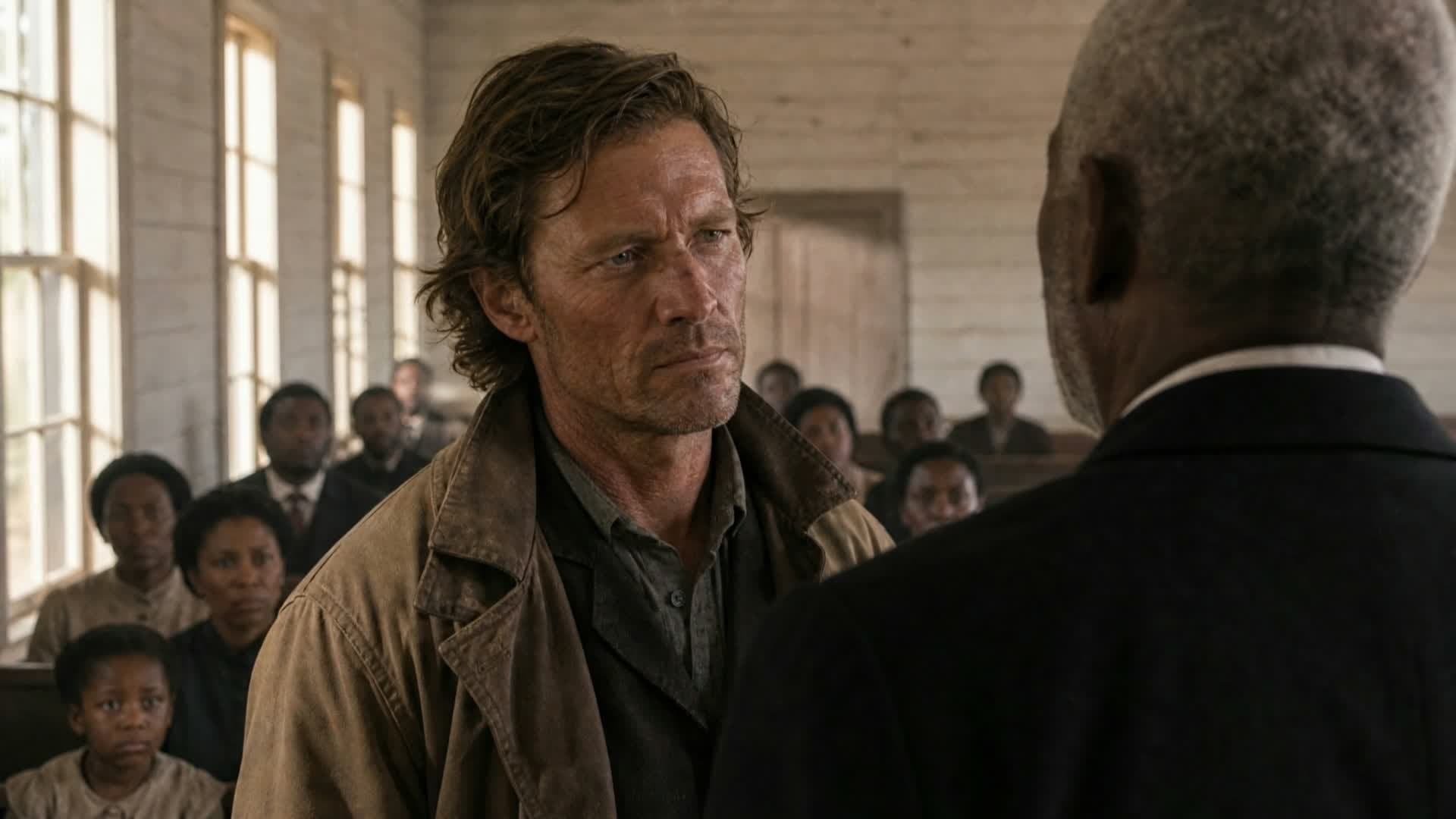
Frame from the finished film · 01
The history underneath
They took the thing that fed our freedom and tried to make it our shame.
After emancipation, free Black families grew and sold watermelons, and the crop became a symbol of their independence: money of their own, land of their own. White Southerners answered by turning the fruit into a joke. Cartoons, postcards, minstrel songs and some of the earliest motion pictures recast it as proof that Black people were lazy, simple and childish.
The film opens on that record. Edison's Watermelon Contest (1900) and The Watermelon Patch (1905) were hits in their day, staged for white audiences to laugh at. Both are now in the public domain, and they appear here to show how the stereotype was manufactured and sold.
The town of Mercy and its six elders are fiction. The history of the watermelon stereotype is real.
Characters
ObadiahThe preacher. Thirty years ago his company called him Captain
Miss ClemThe church pianist, and the fastest hands in the county
OtisThe marksman. Never missed, and is building a new pew
LutherBought the Gatling gun with harvest money and complained about the price ever since
VestaKeeps the town's books, and knows exactly what everything is worth
OdessaThe seamstress, with a satchel nobody asks about
CrowellWants the fields and the road. Today
PikeLeads his hired guns, and has heard the stories
Production notes
Fights are staged as long takes of eight to ten seconds, with the camera angles changing inside the shot rather than cut together from short clips.
The opening uses real archival film from 1900 and 1905. The narration is by the Strange Fruit narrator, Zephyr.
Every character, location, voice and shot in the story itself was created with generative AI.
Content advisory
Gun violence and death, and historical racist imagery shown in the opening to expose the watermelon stereotype.
The archive is still growing
More from Mercy is coming.
Books, scripts, artwork, and immersive editions will appear here as this story’s archive expands.