 STRANGE FRUITShop the archive
Episode 12 · 1912 · New York City
Black Face
Evelyn Mercer is the finest colored soprano on the New York stage, and the house at the Lyceum did not pay for her voice. They paid for the tradition — the cork, the mouth, the shuffle. In the alley behind the theater an old man sells her a tin of black polish that goes on easy and comes off easy. For most. Halfway through the second verse, the face she put on stops being paint, and everyone who laughed finds out what it costs to be entertained by another one's pain.
- Collection
- Season 1
- Episode
- 12
- Runtime
- 6:16
- Year
- 1912
- Setting
- New York City
Images from the episode
The visual archive
Select a frame to look closer.
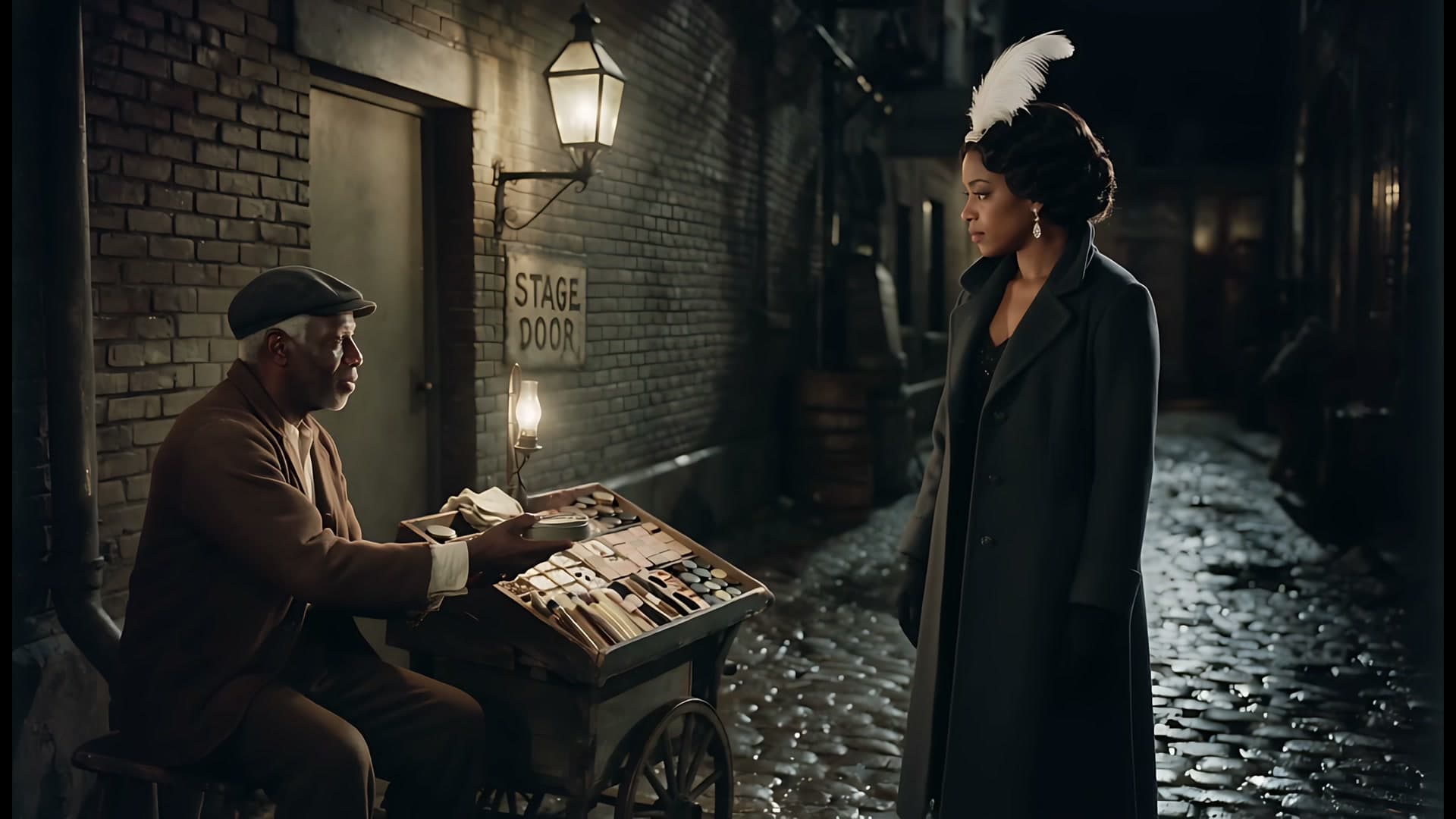
Frame from the finished film · 01
Inside the story
Some folks don't get to take theirs off.
In 1912 the minstrel show was not a relic; it was the most popular entertainment in America, and Black performers who wanted a stage had to cork up to stand on it. Bert Williams, the highest-paid man on Broadway, blacked his face every night of his life. The Lyceum's manager isn't cruel when he tells Evelyn the house paid for the tradition. He's reading her the figures.
The Vendor's paint doesn't crack when you smile, and it doesn't stay on the skin. It goes underneath. By the second chorus the orchestra section that came to laugh is turning dark from the roots, and the balcony that came to hear her sing is turning pale — and the next morning every one of them wakes up in the life they'd been laughing at. Evelyn washes hers off. Almost.
Characters
Evelyn MercerA colored soprano, one night only at the Lyceum
The VendorSells polish from a pushcart in the alley behind the stage door — one tin, no charge yet
The ManagerRuns the Lyceum; the house is sold through the second balcony
Charles WhitmoreWhitmore & Company, Broad Street — front row of the orchestra, shouting for the dance
MargaretKeeps the front desk at Whitmore & Company, and the bell
Production notes
Set at a Fourteenth Street vaudeville house and a Broad Street bank, New York City, 1912.
The song "Does My Life Entertain You" was written for the episode and is sung live in the room; there is no other music in the theater.
The house is segregated the way it was: white orchestra and boxes, Black balcony.
Every character, location, voice, and shot was created with generative AI.
Content advisory
Depicts blackface minstrelsy, a real American stage tradition of the period, as the subject of a horror story. Racial violence, body horror.
The archive is still growing
More from Black Face is coming.
Books, scripts, artwork, and immersive editions will appear here as this story’s archive expands.